

Why Community Features Matter More Than Ever in Poker
More Than Just Another Hand
After more than 20 years of developing online poker platforms and working with operators across multiple markets, we've learned one lesson that has remained remarkably consistent: players rarely stay because of a single feature. They stay because a poker room begins to feel familiar. They recognize opponents, develop routines, build rivalries, and gradually become part of a community. In today's competitive market, that sense of belonging has become one of the most valuable assets an operator can create.
What we've observed throughout the years also reflects a broader shift across the gaming industry. According to Newzoo's Global Gamer Study, 80% of consumers play video games, and many engage with gaming beyond simply playing through content, communities, and social interaction. As gaming becomes increasingly community-driven, players naturally expect that same sense of connection and belonging from online poker platforms as well.
Poker Has Always Been a Social Game
Unlike most casino games, poker isn't played against the house, it's played against other people. Every table brings together real opponents, and every hand creates an opportunity for interaction. Over time, familiar usernames become recognizable rivals, regular tournaments develop recurring storylines, and memorable hands become shared experiences that players remember long after the session ends.
The social side of poker has always existed. What has changed is that today's platforms have far more opportunities to strengthen it. Community is no longer a by-product of the game; it's becoming an intentional part of the overall player experience.
Community Is Becoming a Competitive Advantage
Today's operators aren't competing solely with other poker rooms. They're competing with multiplayer games, live-service titles, Discord communities, streaming platforms, and countless other digital experiences where interaction is just as important as gameplay. As player expectations evolve, people aren't simply looking for somewhere to play, they're looking for somewhere they genuinely enjoy returning to.
We've seen this firsthand while working with operators across different markets. The poker rooms that foster lasting communities don't necessarily have the largest guarantees or the most aggressive promotions. More often, they're the ones where players recognize familiar opponents, actively participate in recurring events, and feel connected to the platform beyond the cards.
Community features are no longer "nice-to-have" additions, they've become one of the strongest drivers of long-term loyalty. Promotions can be copied. Bonus systems can be replicated. Tournament guarantees can always be matched. A thriving community, however, develops over years of interaction and is far more difficult for competitors to recreate.
Small Features Create Bigger Experiences
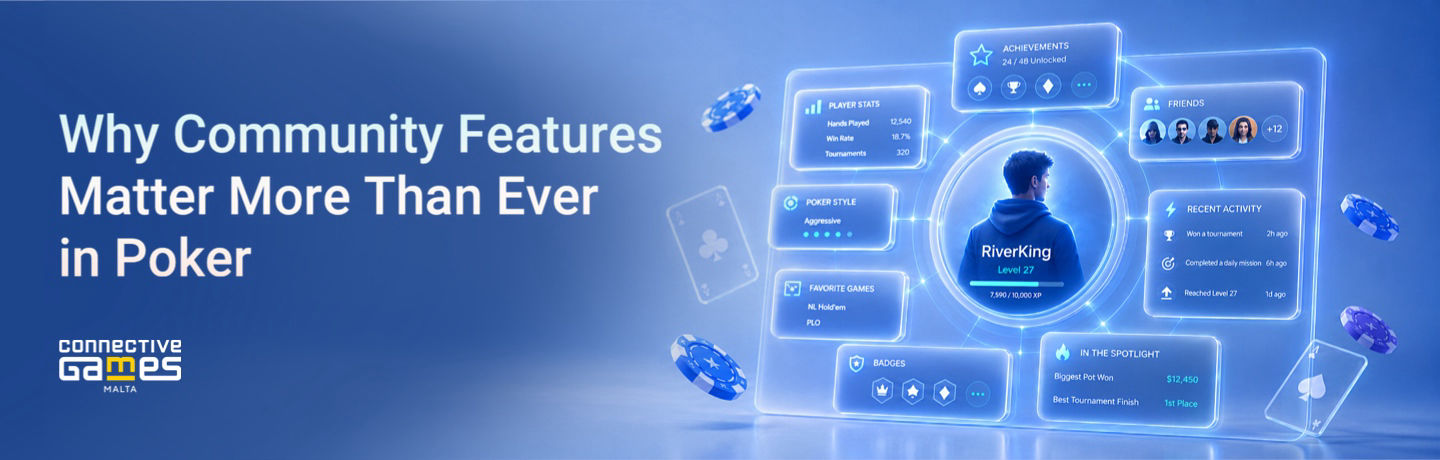
Features such as table chat, emojis, throwables, player profiles, achievements, leaderboards, and reactions may appear relatively small when viewed individually. None of them changes the rules of poker, yet together they fundamentally change how the platform feels.
A playful emoji after a successful bluff, a familiar opponent joining another evening tournament, or a lighthearted conversation between regular players transforms anonymous sessions into memorable experiences. Seasonal leaderboards, missions, and achievements further strengthen that sense of participation by giving players shared goals and reasons to keep coming back.
Individually, these interactions may seem insignificant. Collectively, they create personality, and personality is what turns occasional visitors into loyal members of a community.
Identity Matters More Than Operators Sometimes Realize
One observation we've seen repeatedly over the years is that players don't invest only in their bankroll but also in their identity. Recognizable usernames, VIP status, achievements, seasonal rankings, and reputation among regular opponents all contribute to a sense of belonging. Gradually, players stop feeling like anonymous users and begin feeling like members of a community.
Research increasingly supports what we've observed throughout our years in online poker: community participation strengthens players' sense of identity, belonging, and long-term engagement. A recent study highlights that online gaming communities foster meaningful social connections and become an important part of how players express themselves and remain engaged over time. In other words, community isn't simply another feature layered onto gameplay, it becomes part of the overall player experience.
Community Creates Retention That Promotions Can't Buy
Traditional retention relies heavily on financial incentives. Community creates emotional ones.
Players return because they expect to see familiar opponents, because they don't want to miss the weekly tournament everyone talks about, because they're climbing the leaderboard alongside players they recognize, and because the poker room starts feeling less like software and more like a place.
From our perspective, this remains one of the industry's most underestimated retention drivers. The strongest poker ecosystems aren't necessarily the ones offering the biggest bonuses but the ones players simply don't want to leave.
Community Never Stands Still
One thing we've learned over the years is that player expectations never stand still.
The way people communicate, compete, and interact online continues to evolve, and poker platforms need to evolve with them. Features that felt innovative a decade ago are now considered standard, while new forms of player interaction continue to emerge across gaming and digital entertainment.
This philosophy continues to shape how we develop our own platform. Rather than treating social features as a fixed checklist, we see them as an evolving part of the player experience. As player expectations change, we continue expanding the ways players can communicate, compete, express themselves, and interact, helping operators create poker rooms that feel active, welcoming, and relevant.
For us, building community isn't about adding another icon to the interface. It's about creating more opportunities for players to interact, celebrate victories, express their personalities, and build lasting relationships that keep the entire poker ecosystem alive.
The Future of Poker Is Still Human
Technology will continue to evolve. AI will personalize player experiences. Platforms will become faster. New game formats will continue to emerge.
But one thing is unlikely to change: poker has always been about people.
After more than two decades in online poker, we believe the operators that will thrive in the years ahead won't necessarily be those with the largest promotions or the longest feature lists. They'll be the ones that succeed in building genuine communities, places where players return not only for the games, but for the people they play them with.